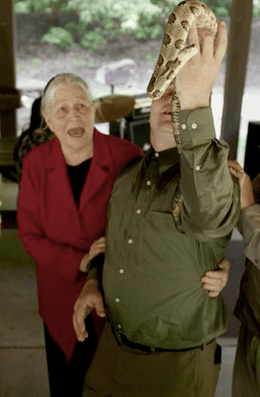
Randy Wolford made the news this week. A pastor in a Christian sect that promotes holding and carrying venomous snakes as a way of expressing faith in God, Wolford died from a snake bite. Just like his father had.
Lauren Pond, a photojournalist with the Washington Post, was at the church service when Wolford was bitten and she stayed with him and his family, taking photos, during the long hours before Wolford's death. In the wake of the experience, Pond has written a thoughtful essay about both journalistic and personal ethics. When a journalist documents someone's death like this, what should be done with the photos? If someone refuses medical help that you know they need, are you under obligation to help them anyway … or to respect their decisions?
Some of the people who attended last Sunday's service have struggled with Mack's death, as I have. "Sometimes, I feel like we're all guilty of negligent homicide," one man wrote to me in a Facebook message following Mack's death. "I went down there a 'believer.' That faith has seriously been called into question. I was face-to-face with him and watched him die a gruesome death. . . . Is this really what God wants?"
That's a good question.
I know many photojournalists have been in situations similar to mine. Pulitzer Prize winner Kevin Carter photographed an emaciated Sudanese child struggling to reach a food center during a famine — as a vulture waited nearby. He was roundly criticized for not helping the child, which, along with the disturbing memories of the events he had covered and other factors, may have contributed to his suicide. As photojournalists, we have a unique responsibility to record history and share stories in as unbiased and unobtrusive a way as possible. But when someone is hurt and suffering, we have to balance our instincts as professionals with basic human decency and care.


