Features Podcasts Family Video Comics Music Tech Science Books Film & TV Games ✚

Jill

Great depressing moments in history: Philippe Lebon and the streetlights of Paris

Maggie Koerth-Baker at 11:35 am Tue, Sep 4, 2012

— FEATURED —

THE LATEST

Guatemala: Archive of documents from Rios Montt genocide trial, overturned 10 days after guilty verdict

THE LATEST

Guatemala: Nation's highest court throws out Ríos Montt genocide trial verdict and prison sentence

Feature

Eurovision 2013: An American in London

Book Review

The Twelve-Fingered Boy - mesmerizing YA horror novel

Book Review

Black Code: how spies, cops and crims are making cyberspace unfit for human habitation

— FOLLOW US —

Boing Boing is on Twitter and Facebook. Subscribe to our RSS feed or daily email.


— POLICIES —

Except where indicated, Boing Boing is licensed under a Creative Commons License permitting non-commercial sharing with attribution


— FONTS —

Tweet
Kindle

At his blog, Kafka's Mouse, author P.D. Smith details the history of lighting infrastructure in cities—a story that begins with the dawn of gas lights.

London was the first city to get gas-powered street lamps, in 1812. But it was not the first city to hear such an idea proposed. In fact, in an alternate reality, Paris could have been the first illuminated city — had they only listened to tragically hip engineer Philippe Lebon, who was into gas street lamps before they were cool.

It was the French engineer Philippe Lebon (1767-1804) who had the ingenious – though as it turned out premature – idea of using the gas produced from burning wood for heating and lighting cities. He was utterly convinced that he had discovered a new power source for what he called ‘thermolamps or stoves that heat cheaply’. But like many inventors, he found it difficult to convince others that his ideas could work. The French government rejected his proposal to illuminate Paris with gas lights.

So, in 1801, Lebon rented a house in the heart of Paris and, using his invention, spectacularly illuminated its rooms and even the grotto in the garden. Despite this shining example, the French press poured scorn on his idea and manufacturers remained sceptical. Poor Lebon was ruined and his idea faded with the turning out of the last gas-lamp in his show-house. Lebon had spent his entire family fortune on the idea and died in 1804, a bitter man.

But the very next year, William Murdock – who had also invented an ingenious pneumatic urban message system – began installing coal-gas lighting in mills in Manchester and Halifax. Murdock had started experimenting with coal-gas a few years earlier, after hearing of Lebon’s gas-lit house. The age of gas lighting had finally dawned, but sadly without its pioneer, Lebon, ever seeing its light.

Read the rest at Kafka's Mouse

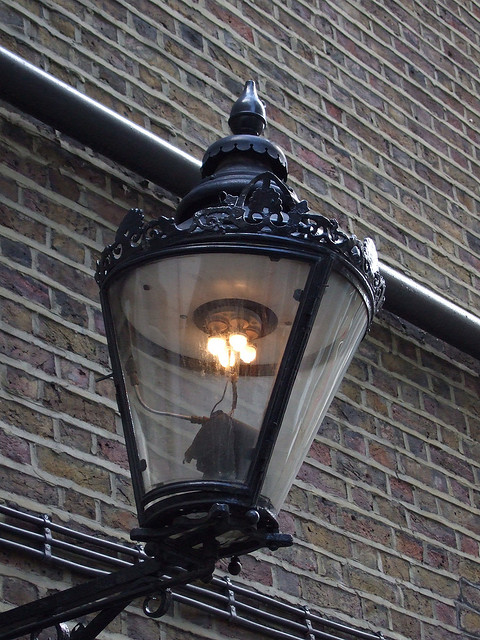
Image: A gas lamp, a Creative Commons Attribution (2.0) image from jamescridland's photostream

Maggie Koerth-Baker is the science editor at BoingBoing.net. She writes a monthly column for The New York Times Magazine and is the author of Before the Lights Go Out, a book about electricity, infrastructure, and the future of energy. You can find Maggie on Twitter and Facebook.

Maggie goes places and talks to people. Find out where she'll be speaking next.

MORE:  History • Science • Technology

More at Boing Boing

Eurovision 2013: An American in London

The technology that links taxonomy and Star Trek

  • mccrum

    What I consider one of the more interesting things about this period in lighting is that it took approximately a hundred years or so for 50% of the populace to  move from candles to gas lighting.

    It then took about ten years to get 50% of the populace to use electric lighting.

  • http://germanwotd.com Amelia_G

    What an awesome story! Thank you. This also happened under Napoleon, after the post-French Revolution attempt to implement modern (decimal, secular) ideas and Napoleon hisself had expressed an interest in the practical advantages of engineers’ ideas.