Features Podcasts Family Video Comics Music Tech Science Books Film & TV Games ✚

Jill

Hiking an abandoned hydroelectric power plant at Niagara Falls

Maggie Koerth-Baker at 10:15 am Tue, Sep 11, 2012

— FEATURED —

THE LATEST

Guatemala: Archive of documents from Rios Montt genocide trial, overturned 10 days after guilty verdict

THE LATEST

Guatemala: Nation's highest court throws out Ríos Montt genocide trial verdict and prison sentence

Feature

Eurovision 2013: An American in London

Book Review

The Twelve-Fingered Boy - mesmerizing YA horror novel

Book Review

Black Code: how spies, cops and crims are making cyberspace unfit for human habitation

— FOLLOW US —

Boing Boing is on Twitter and Facebook. Subscribe to our RSS feed or daily email.


— POLICIES —

Except where indicated, Boing Boing is licensed under a Creative Commons License permitting non-commercial sharing with attribution


— FONTS —

Tweet
Kindle

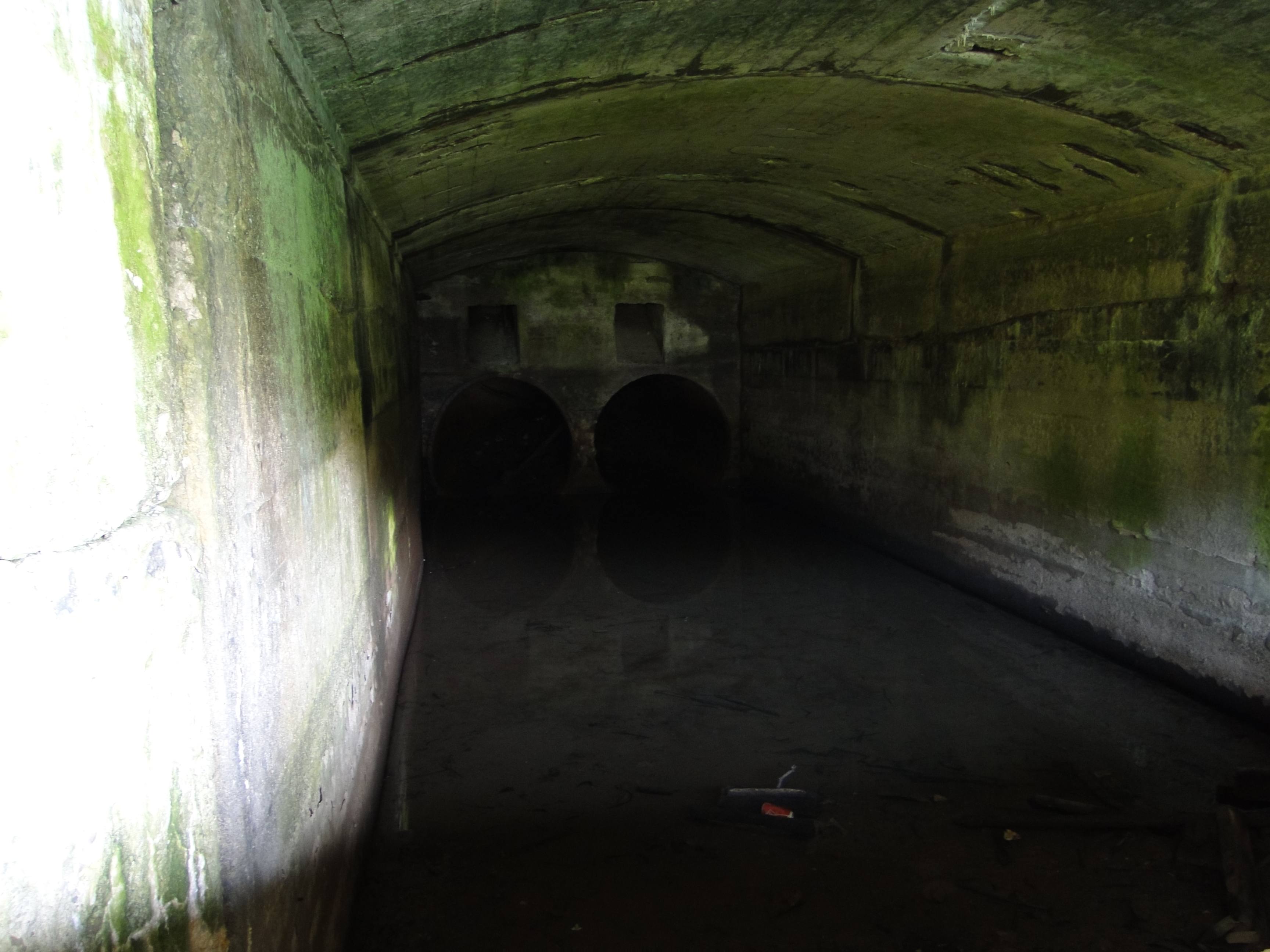
Geology Ph.D. student and volcano blogger Jessica Ball recently took a detour away from volcanoes and into the world of awesome abandoned industrial sites.

Have I mentioned that I LOVE awesome abandoned industrial sites?

Ball went hiking around the former site of the Schoellkopf Power Station—a hydroelectric plant that once turned the force of Niagara Falls into electricity.

The ruins of this power plant were the second station built on the site, and were completed in 1895. Both buildings were constructed by Jacob Schoellkopf, who had purchased a hydraulic canal, the land around it and the power rights in 1877. The plant eventually became part of the Niagara Falls Power Company in the early twentieth century. But by 1956, water that had been seeping through the rock in the gorge wall behind the plant had weakened it. On June 7th, workers noticed cracks in the rear wall of the plant, and at 5 that evening a catastrophic collapse destroyed more than 2/3 of the station. One man died, several had to be rescued from the Niagara River, and debris from the collapse made it as far as the Canadian side of the Gorge.

Before the collapse, the plant was generating 360,000 kilowatts of power for the city of Niagara Falls; afterward plants on the Canadian side picked up the slack, and the destroyed plant was later surpassed by redevelopment of the hydropower infrastructure in the area, including the construction of the Robert Moses Generating Station farther downstream.

Check out her photo-filled tour of the site at the Magma Cum Laude blog

Maggie Koerth-Baker is the science editor at BoingBoing.net. She writes a monthly column for The New York Times Magazine and is the author of Before the Lights Go Out, a book about electricity, infrastructure, and the future of energy. You can find Maggie on Twitter and Facebook.

Maggie goes places and talks to people. Find out where she'll be speaking next.

MORE:  awesome • History • Science • urban archaeology

More at Boing Boing

Eurovision 2013: An American in London

The technology that links taxonomy and Star Trek

  • Brainspore

    Bender? Are you in here?

  • http://twitter.com/joeybladb joe k.

    Slightly more clandestine Niagara hydro-power exploration: http://www.silentuk.com/?p=1174 and http://www.silentuk.com/?p=1103.

  • niktemadur

    Gives more of a spelunking ambiance than hiking.

  • TheMadLibrarian

    My favorite thing is hiking the old abandoned roads that may lead to the abandoned facilities.  Some of the architecture the engineers used to get to otherwise pretty inaccessible spots is fascinating.

    So it was a rockslide, a.k.a rock face collapse, that destroyed the building?  Would it have come down on its own eventually, or was the cliff weakened by the excavations there?  It survived for 60+ years, so it was a slow destruction.

  • http://ravenlunatick.wordpress.com/ ravenlunatick

    Most outstanding! I have a Niagara falls story looking for a setting. I think this may be it…

  • RJ

    On the site, she writes, “I decided to stay out of the penstocks, but the trail continues on top of them.” Only a squealing helmet-tard would think it’s a good idea to go frolicking in the murky water in those penstocks.

    I’m not trying to insult her. I just have a profound aversion to murky water.