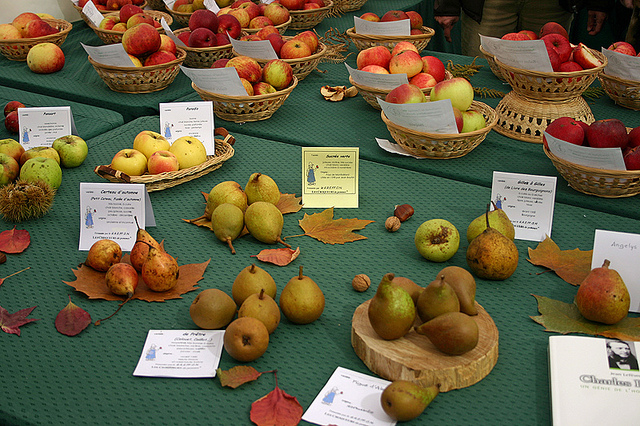
The Body Mass Index is a popular way to measure and assess whether someone is overweight or underweight. Basically, it's just your weight divided by your height. BMI is a simple system, but it does have some flaws. Over at the Obesity Panacea blog, Peter Janiszewski (who has a Ph.D. in exercise physiology) has a nice post explaining why BMI is sometimes useful, and also why it's not a great measurement of individual health.
Right now, I bet you're chomping at the bit with, "Yeah! The BMI doesn't distinguish between fat and muscle!" And you're right. It doesn't. A simple BMI measurement would tell you that The Rock is no different than an out-of-shape couch potato of the same height and weight. Obviously, that's a flaw in the system. But it's not the most important flaw, Janiszewki argues. In fact, he says, this well-known problem with BMI is the easiest one to work around. A simple visual check can tell your doctor whether your high BMI is due to excess muscle or excess fat.
The real problems with BMI, he says, are a lot more complicated. For one thing, the system doesn't distinguish between very real differences in health outcomes for different body types. "Pears" and "Apples" might have the same BMI, but with opposite health results. Even more troubling: You can change your lifestyle, and become objectively healthier, and your BMI might not budge.
This is particularly so if you adopt a physically active lifestyle, along with a balanced diet, but are not necessarily cutting a whole lot of calories. This lack of change in BMI or body weight is all too often interpreted as a failure, resulting in the disappointed individual resuming their inactive lifestyle and unhealthy eating patterns.
However, as we have argued most recently in a paper in the Canadian Journal of Cardiology, several lines of evidence suggest that weight loss or changes in BMI are not absolutely necessary to observe substantial health benefit from a healthy lifestyle. Thus, an apparent resistance to weight-loss should never be a reason for stopping your healthy behaviours.
Read the rest at Obesity Panacea
Image: Wisley Taste of Autumn: Europom, a Creative Commons Attribution (2.0) image from rictor-and-david's photostream


